Mindset: The New Psychology of Success
by Carol Dweck
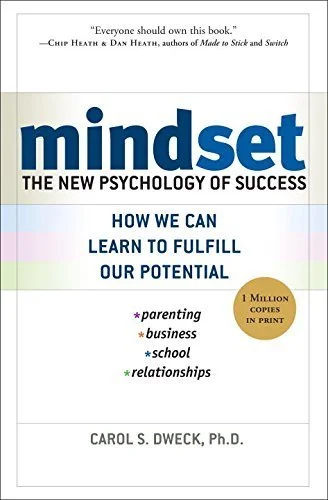
image from Goodreads
“When you enter a mindset, you enter a new world. In one world – the world of fixed traits – success is about proving you’re smart or talented. Validating yourself. The other – the world of changing qualities – it’s about stretching yourself to learn something new. Developing yourself.”
“If parents want to give their children a gift, the best thing they can do is teach their children to love challenges, to be intrigued by mistakes, enjoy effort, seek new strategies and keep learning.”
It may come as no surprise to readers of this blog, but Mindset is a required read, if for no other reason than as a reminder that we are malleable beings, always capable of growth. The Gentlemen’s Reading List believes continual learning is not only achievable but is a mandatory and necessary part of being human. Dweck’s premise is that there are two mindsets – fixed and growth. An individual with a fixed mindset does not believe one can change. You are who you are. Your talent, your intelligence, your personality, are all fixed. These cannot be altered, changed, or improved. A growth mindset, on the other hand, is about learning, improving, getting better, and knowing your abilities are not set in stone. Most people would say they have a growth-oriented attitude but then go on to treat themselves and others with a fixed mindset. If you’ve ever caught yourself saying, “well, that’s just who they are” or even “I’m too old/young to do this or learn that” or a variation thereof, then you may be operating with a fixed mindset.
These mindsets, however, are not just about whether someone can improve or get better. They are primarily about resiliency. As one can imagine, a fixed minded person does not deal well with failure, setbacks, or even constructive criticism. To a person like this, any of these can be devastating and highly personal. Dweck posits that a fixed mindset can be fostered if someone has been repeatedly told that they are the best or that they are innately talented. As a result, hard work and effort are not seen as keys to success. Someone with a growth mindset knows people are always learning, improving, and getting better. Abilities are not fixed but honed. This person may fail but will use failure as a learning experience, a challenge to be overcome. A growth-minded individual believes hard work, not ingrained traits, matters most. They can take constructive criticism, apply it, and not perceive it as a knock against their character.
As I read Mindset, my thoughts were constantly focused on parenting. Now, this isn’t a book on parenting, but it does contain a lengthy chapter on cultivating the right mindset in children, so they become more resilient. I questioned myself, reflecting on what I’m doing to foster a growth mindset in my children. Have I been telling them they are smart without praising the results of their efforts? Have I been inadvertently instilling in them a fixed mindset? We all want our kids to do well and feel well, and praise is a big part of that. But what message am I sending my kids with my words? Recent events made me think about this more. My daughter tried out for the school volleyball team. She did not play well enough for the “A” team and was put on the “B” team instead. This was the team for beginners, newer kids, and those not as good and experienced as the “A” team. Her attitude? She was happy! She reasoned that she’d get more opportunities to play, learn, get better, and not be overwhelmed by bigger and better kids. With practice, she reasoned, she can make the “A” team next year. My other daughter does not take criticism well, regardless of how constructive it is. She can get defensive, apologizes for messing up, and gets down on herself. To illustrate, she was playing a math game on my phone, practicing her multiplication and division. I noticed that every time she got a problem wrong, she’d restart the game. I asked her why, and she replied it was so she can get a perfect score. A noble goal but the point of the game was to practice and improve math skills. I told her that she should finish the game and work to get a better score each time, not strive for perfection each time. To be fair, both children have exhibited both growth and fixed mindsets at various times. This observation may suggest that as parents, we pay closer attention to my language and the messages I am conveying. Kids are perceptive and pick up what others say. These contrasting mindsets, I must note, are just as prevalent and pronounced in adults. I’ve seen far too many grown-ups in the workplace be unresponsive to constructive criticism. They don’t view feedback as an opportunity to learn and improve. Rather, any criticism is taken as a personal affront. Since a fixed mindset can impact the quality of their adult life, I want to ensure my kids are prepared.
How sad life would be if everyone had zero opportunity or hope of getting better or becoming better people. At The Gentlemen’s Reading List we are all about the ability of men to grow and become the best versions of themselves through reading and learning. Life is exciting and worth living because the person we were yesterday is not the person we are today. Who we are today is not who we will be tomorrow. The mindset we cultivate in ourselves and in others precipitates this improvement. So go ahead, cultivate a new talent. Learn a new skill. Welcome constructive feedback. Read a book by an author you disagree with and develop the skill of not being offended by ideas you do not like. You may gain a new perspective. Be comfortable with growing as a person. Embrace new and novel experiences so that you can have a more interesting life.