FIVE MOVIES THAT ARE BETTER THAN THE BOOKS
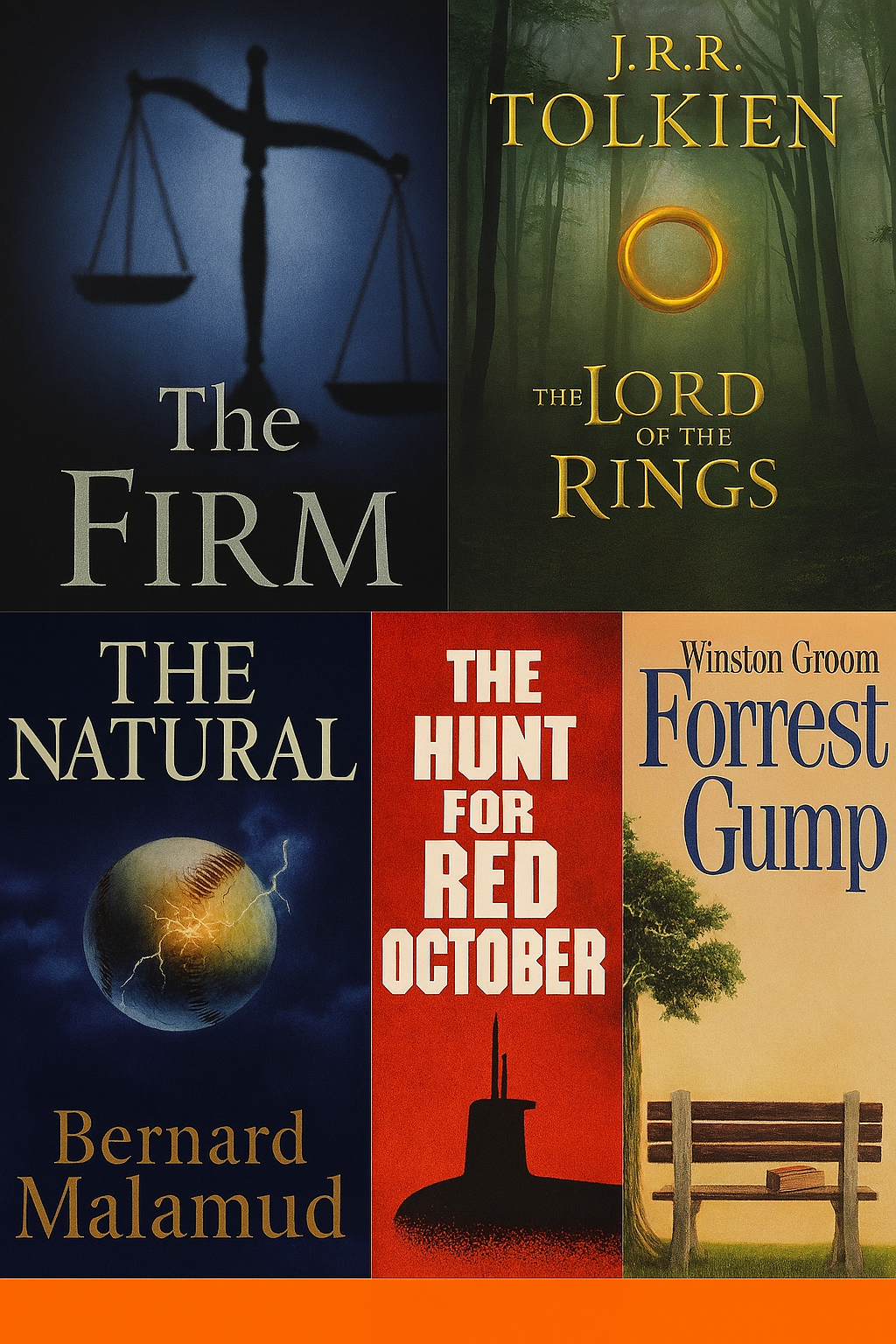
“The book is better than the movie.” This is a common adage that usually rings true. But as an avowed bibliophile, I know this is not always the case. That said, the written word has distinct advantages over moving pictures. Books are usually more detailed and enable richer character development. Books allow our imaginations to run wild, creating a world that exists nowhere else but in our minds. After all, no two imaginations are the same, so each person experiences a book differently. Movies can ruin the entrenched images we have long conjured and internalized. Can you recall an instance when your favorite literary character, someone you’ve distinctly envisioned, was ruined because of a particular casting choice? And because of this, you never read the book the same way again? Or perhaps there was a particular setting or a scene that a movie completely botched. After all, that is the thing about books and literature – it is so personal because all the action happens in our head. The mind is where scenes play out so perfectly. Because of this, there are movies (and mini-series) I have avoided because I don’t want my version to be ruined by someone else’s vision.
But this does not mean a movie can never improve upon a book. Far from it. In my limited experience (and a not at all scientific estimate) I would say that 25% of the time the movie is better than the book. Admittedly, this is subjective but for one reason or another, the movie’s interpretation or adaptation is simply more enjoyable. Sometimes the movie’s pacing is better. Other times, endings changed for the better. On more than one occasion, movies have combined characters into an amalgamation that simply makes more sense.
I’ve compiled five examples of movies that I think are better than their books. Each movie listed was adapted from the book and not the other way around. This list isn’t comprehensive. Further, I would not classify these as the best movie adaptations of terrible books. In fact, a couple of these books are quite good – I’m only suggesting the movie is better. This list illustrates five instances and ways in which the film version improved on the movie. These choices are completely subjective and may be controversial for fans of certain genres. In each case, however, I liked the movie over the book. In no specific order, let the conversation begin:
The Hunt for Red October
This is a hard one for me to put on the list because I really like the book. In fact, The Hunt for Red October was one of my favorite books when I was younger and I have a soft spot in my heart for it. But after some soul searching, I finally must admit, I like the movie more. The plot is the same: a renegade Soviet submarine Captain is chased across the Atlantic by the U.S. and the Soviet Navies. It’s thrilling and should be required viewing (and reading) for fans of Cold War espionage and military brinksmanship.
The movie compresses the book’s timeline and moves quickly. It is great cinema. The movie is fast paced and doesn’t let up until the very end. The climax is tense and the ending is satisfying. It also helps to have a perfectly cast Sean Connery and Alec Baldwin in the lead roles. The movie takes out superfluous material and anything that is not 100% necessary. That is not to say the book is slow or boring. It is not. The book just contains added subplots and scenes that would’ve slowed down the movie. The Hunt for Red October is still my favorite Tom Clancy book and near the top of my favorite action novels. However, it is an example of a fantastic book that made a better movie through the subtle art of subtraction.
Forrest Gump
Of all the books here, this I list here, this one has the widest gulf between the book and the movie. The movie is simply better in every way imaginable. In fact, Forrest Gump is one of the most cited examples of a movie being better than the book. I concur. This is a clear example of taking a book and then improving upon the story, the characters, their experiences, and plot. The movie’s overall feel is different. It is heartwarming and endearing. The book’s Forrest Gump isn’t likable. The more I read, the more I not only disliked him, but hoped for his failure. Tom Hanks’ Forrest Gump, on the other hand, is one of cinema’s great characters. We want him to succeed in each adventure, and we continually root for him. Jenny and Lt. Dan are treated differently as well. In the movie, they are flawed, complex, very well acted, and we hope for their redemption. In the book? I couldn’t relate to them and really did not want to.
In the book, Forrest was a wrestler, an astronaut, and in addition to having other not-believable experiences, he swore constantly, and muttered racist comments. Not even Tom Hanks could have redeemed him. I must note, I have really enjoyed other Winston Groom books such as The Generals and The Aviators. Both are solid popular histories. But Forrest Gump falls flat. I can definitively say that the movie by Robert Zemekis was uplifting, touching, and memorable. The book just left a bad taste in my mouth.
The Natural
I’m a sucker for baseball books. The Natural? Not so much. This is another great movie that rescued a subpar book. Like Tom Hanks’ Forrest Gump, Robert Redford’s Roy Hobbs is more likable and even heroic. In the movie, Roy Hobbs is an upright and honest character. He does not accept bribes, and is motivated not by money or women, but baseball. I cannot imagine Robert Redford playing Roy Hobbs from the book. That Hobbs is darker. He is a is a fallen hero who succumbs to his inner demons. Is he more human? Perhaps. But that doesn’t make him deeper or even more interesting. Redford’s Hobbs was the baseball player that every kid wants to be. We relate to him because he embodies what we want from a ball player, he plays for the love of the game.
The movie follows the book’s first ½ closely – an aging baseball player joins a failing team and helps turn thing around. The second half is where the book lost me. It stops being a baseball book and becomes about someone’s fall from grace. Relatable? Maybe. Fun? Absolutely not. And the mysterious woman in standing up during a game in Chicago? The movie treated this subplot as a critical piece of the story rather than what seemed like an unnecessary diversion that didn’t drive the book’s narrative forward.
The Firm
John Grisham books, to me, are just, OK. Not that they are bad, I’m just not into legal thrillers. I neither love them nor hate them. The Firm, as an example, is a perfectly fine book. It was entertaining but didn’t wow me. The movie is better. Like The Natural, the movie’s first half follows the book closely. What the movie does is improve upon the ending. SPOILER ALERT: the book’s conclusion ties up some loose ends as the protagonist, Mitch, sails off into the sunset having defeated his adversaries in an acceptable but not original way. The movie’s ending was much more satisfying. I just got the sense after seeing the movie that the book just dialed it in. I came away from the movie thinking that Mitch not only saved himself and his family but didn’t compromise anything and he was glad that he wouldn’t spend his life hiding and always looking over his shoulder.
The Lord of the Rings
This might be my most controversial choice. I understand that people love these books. They are classics in the fantasy genre. I have seen all three movies and they are excellent. But I struggled with the books. Not that they are bad. Far from it. The story is fun and the characters are compelling. I’m just not a fantasy reader. I often have difficulty reading and remembering hard to pronounce made-up names and places. It is hard for me to envision the world fantasy authors build. I admit that Tolkien does a better job than most fantasy writers – laying out his vision of Middle Earth, with its Hobbits, Elves, Wizards, and Dwarfs. Even so, my brain isn’t built for fantasy, and these are not the easiest books for me.
The Lord of the Rings Trilogy, like other fantasy movies, took multiple viewing before I understood places, pronunciations, and character names. While the movie subtracts scenes and alters others, it is pretty faithful to the book. The movies, by virtue of the cinematic medium, made the story accessible in a way that the books could not. Again, not the books’ fault. It’s more an indictment of my reading preferences. I normally don’t read fantasy. However, I will not give up and am itching to tackle the books again. The point is, the movies were fantastic. They were well acted, stunning to look at, and approachable. With a run time of almost ten hours, we get to experience the power of film and movie making at its finest. Hard to beat that.
Five other movies that, in my opinion, are better than the books:
Jaws – in the hands of a young Stephen Spielberg, a story about a man-eating shark takes on a whole other level of suspense.
Sense and Sensibility – I like Jane Austen, but this one is tied for my least favorite Austen book. The Ang Lee movie with Emma Thompson wasn’t great, but at two hours, it held my interest only slightly more than the book.
Schindler’s List – The book was great. I loved it. It should be required reading. Spielberg’s classic, however, is simply one of the best films ever made. Period.
Goodfellas – Based on a true story and a book called Wiseguys. Like Schindler’s List, the book was fantastic. But in the hands of Martin Scorsese, it is an all-time classic.
Rita Hayworth and The Shawshank Redemption – I liked this short Stephen King novella more than most. But the Frank Darabont movie, with stellar performances by Morgan Freeman and Tim Robbins, set it apart. This is a rare example of a movie adding details and context to the story. And it worked magnificently.