by Barbara Tuchman
from Goodreads
“To release the telegram meant risking the code; but to withhold the telegram meant throwing away the greatest triumph possession of the code could bring.”
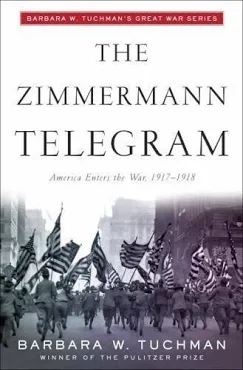
Some of my favorite reads are books about historical blunders – especially military disasters – and learning why decision makers determine that idiotic courses of action are sound ideas. I marvel at how political leaders are led astray by overconfidence, emphatic ‘yes men,’ and an unhealthy dose of hubris. As such, we can learn more from others’ past mistakes than history’s great successes. Also, I cannot overemphasize the enjoyment gained from studying stupidity. These reasons, along with my never-ending fascination with World War I, are what make Barabara Tuchman’s The Zimmermann Telegram so appealing. In a conflict that featured its share of epic blunders, this infamous telegram ranks near the top of the war’s strategic errors. Along with the endless carnage of Verdun, the deadly optimism of the Somme, and the nationalistic exuberance behind 1914’s war plans, this one telegram urging Mexico to invade the United States is the epitome of, ‘what the hell were they thinking?”
A little context: by early 1917 the Great War had been raging for two and a half years. Millions were dead. Verdun and the Somme were, from a manpower perspective, failures we cannot even fathom today. The Germans were strangled by a British Naval blockade. They realized that breaking the deadly stalemate required resuming unrestricted U-Boat activity, specifically sinking all allied and neutral nation ships bound for the enemy’s shore. They also knew this might cause the United States to enter the war against Germany. However, many in the German high command regarded America as low threat. Even if they entered the war, mobilization would take so long that Britain and France would be at the bargaining table before any American arrived in Europe. But the German Foreign Minister, Arthur Zimmermann, wanted all bases covered. He reasoned that a war on America’s southern border would tie up U.S. troops, limiting their deployment to the Western Front. Hence, Zimmermann proposed Mexico invade the U.S. In return for Mexico’s invasion, Germany would guarantee Mexico keep Texas, Arizona, and New Mexico when the war ended.
What follows is a thrilling tale of intrigue, lies, diplomacy, and a race to change public opinion. Unfortunately for Germany, their military and political leaders did not account for British codebreakers. The Brits were not only intercepting German messages, but they also had top secret German codebooks. When the British deciphered this telegram, sent indirectly from Zimmermann to the Mexican government, they immediately understood its explosiveness. British Intelligence knew they now held the key to getting America into the war. But, as the quote above suggests, how do you let the U.S. know what you know without giving away the secret of how it was obtained? The story of how the British hid their secret while still letting the United States know about the message is brilliant and fascinating diplomacy.
Beyond British spy craft, the real lesson from The Zimmermann Telegram is German hubris. They overplayed their hand and underestimated their enemies. Just like their faulty assumptions in 1914, the Germans pushed away dissent and had a bad habit of single-minded groupthink. Their overconfidence and failure to appreciate differing opinions would be the German Empire’s downfall. In 1917 they assumed the U-Boat was the answer to everything. They estimated their submarines could end the war in 6 months, well before seeing any American troops on the battlefield. And while it did take over 6 months to get Americans to France, the allies kept fighting, knowing fresh troops would soon arrive. And once Americans were there, the war weary Germans couldn’t keep up. While 1918 saw some of the deadliest fighting, the German offensives ultimately failed to produce the desired results.
The counterfactuals surrounding the Zimmermann Telegram are fascinating to consider. What if Zimmermann failed to send the fateful message? What if the British never intercepted the message? What if Mexico agreed to invade the United States? What if they were successful? What if unrestricted submarine warfare broke the enemies will? What if either side produced an overwhelming battlefield victory before the American mobilized? What if?
In the end, Tuchman best sums up what this episode meant: “In itself the Zimmermann telegram was only a pebble on the long road of history. But a pebble can kill a Goliath, and this one killed the American illusion that we could go about our business happily separate from the other nations. In world affairs it was a German Minister’s minor plot. In the lives of the American people it was the end of innocence.”