by Kelly McGonigal
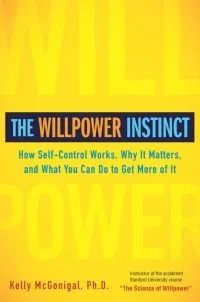
Image From Goodreads
“If we truly want peace of mind and better self-control, we need to accept that it is impossible to control what comes into our mind. All we can do is choose what we believe and what we act on.”
“If there is a secret for greater self-control, the science points to one thing: the power of paying attention. It’s training the mind to recognize when you’re making a choice rather than running on autopilot.”
I am weak. I consistently give into my temptations. In my case, it’s the donuts and ‘fun size’ candy bars my colleagues conveniently set on their desks. Once these little delights come into my line of sight, I cannot help myself. In fact, I never actually realized what a sweet tooth I possessed until working in an office with co-workers that happily bring in donuts each Friday, girl scout cookies each spring, and any assortment of baked goods regardless of the season. And the leftover Halloween candy each November? Let’s just say that my weaknesses are on full display.
That’s not to say I have no willpower at all. I used to smoke. Since quitting, I now have no issues at all passing up a cigarette. It took time but now smoking rarely crosses my mind. However, it wasn’t always like that. After years, I finally had enough. I simply decided I don’t like huffing and puffing during uphill hikes. I decided I don’t like bad breath and rotting gums. I also decided that I want to be in good health as my kids get older. And the rationale behind the decision I made to quit smoking encapsulates one of the main points made by The Willpower Instinct. My long-term goals and values were at odds with my short-term impulses and desires. I unknowingly asked myself a form of the following question, “do I identify more with my impulses and desires or my long-term goals and values?” It became a matter of identity. And the answer was no brainer.
Where The Willpower Instinct really helped was identifying the situations and the reasons why my willpower fails me so often. Now, this is a book on the science of self-control, not a quick fix to solve your worst habits. If anyone reads this looking for an easy solution, they will be disappointed. Rather, we are shown how to understand and identify when and why our willpower fails us. I now recognize some of the mindsets that are sabotaging my goals. The one that hit me like a ton of bricks was “moral licensing.” This is best summed up as “when we have conflicting desires, being good gives us permission to be a little bad.” I find myself in this trap on a regular basis. For instance, I go on a run or a long bike ride, I feel good, I’ve burned some calories, and then I see a cookie. I justify eating it because I worked out today. Since I did good, I can indulge. Paradoxically, one of the worst things I discovered are calorie trackers, especially those that track what I’ve burnt during my workouts. Never mind that these trackers are usually wrong, but if I see that I burned one-thousand calories and then see a donut, I justify eating the sugary four hundred calorie treat because I deserve it. That is moral licensing and it might be responsible for my expanding waistline more than anything else. As Dr. McGonigal explains, when we are good and feel we “deserve a little treat: this sense of entitlement becomes our downfall.” Although moral licensing is one of my biggest problems, knowing and identifying when it happens has helped.
The book also helped me identify willpower issues and how I relate to my future self. So often we “treat our future selves as different people…our future emotions or desires don’t feel as real or pressing as our present desires.” We assume our future selves will be more motivated and better versions of ourselves. I repeatedly tell myself that even if I have that extra donut today, my future self (even my tomorrow self) will never again eat added sugar, and I will be a paragon of virtue. And if I am intellectually honest, that paragon of virtue will feel he is entitled to that jelly donut. This is one of those areas where it is easy to bargain with ourselves because we do not have a realistic picture of our future self.
The Willpower Instinct touches on other topics like dopamine, social proof, and the power of self-awareness. Just like moral licensing and bargaining with our future selves, I found that just by paying attention, I can avoid the pitfalls that limit my willpower. Once I identify where and how I fall short, I can redirect my short-term desires. I’ve made a concerted effort to work on my self-control. I’ve tried to hone my willpower habit and stop doing the negative and begin doing the positive. And sometimes, I fail. I fail because I keep telling myself that tomorrow I will be disciplined. When I wake up tomorrow, the reasoning goes, I will be motivated. HA! It’s an easy trap. But I continue and my willpower gets stronger. Some people may not have issues with moral licensing or bargaining with their future self. Instead, some may justify their actions because of social proof – giving oneself permission to do something because they perceive others doing the same thing. For others it is the dopamine hit as they anticipate a feeling or a situation. Ultimately, as the quote above suggests, it boils down to awareness. We need to pay attention to our triggers and vices and have awareness to recognize and change behaviors.