Mother Night
by Kurt Vonnegut
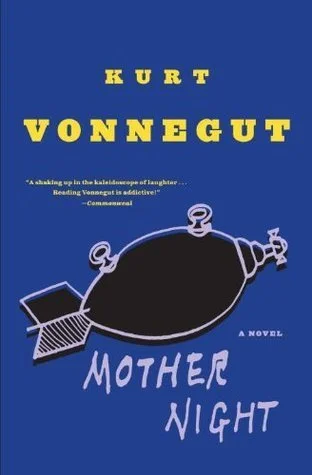
“We are what we pretend to be, so we must be careful about what we pretend to be.”
“One of the first things I discovered when I became an agent was that I couldn’t afford an imagination anymore.”
If I haven’t mentioned it already, I have a love/hate relationship with Kurt Vonnegut. The books I love, I love. The ones I dislike, I really dislike. No middle ground. Mother Night is the former. This is a great book, firmly entrenched in my personal top ten list. It is classic Vonnegut but seems more down to earth than his other well-known works. It is not a sci-fi story like The Sirens of Titan and is less trippy than Slaughterhouse-Five (two of my other favorite Vonnegut works), but it is still filled with sharp wit and satirical commentary. There are no aliens or time travelers. There are no bizarre realities or plot deviations in which the reader must suspend reality. It does, however, contain a narrative which is easy to read while still containing Vonnegut’s style. Mother Night asks deeps questions but never answers them. In this case, can one do the right thing while doing unspeakable evil at the same time? In other words, are you still serving the greater good even if your individual actions in pursuing that good are detestable and cause harm against humanity? Which action outweighs the other? And how is that balance determined?
Howard Campbell Jr. is an American born Nazi propagandist living in Germany during the Second World War. He spews anti-semitism and the vilest hatred while advancing the Nazi cause. The twist is that Campbell is a secret American agent and the horrible things he broadcasts are coded messages to the American intelligence community. Only a handful of people know his real purpose as an American agent and as a result, he gains a reputation of notoriety and becomes a hated figure. Captured after the war, he “escapes” and lives in New York City, broken and depressed because of his past. After some encounters with some colorful characters, he is captured and brought to Israel to stand trial for his crimes.
This book raises great questions regarding what is evil and what is good. Can something be both at the same time? Can a person survive living with these contradictions? In Campbell’s case, this duality ruins him. He exacerbates the Nazi cause while bringing about its ruin. As readers, can we excuse Campbell’s role in the Holocaust even though the venom he spewed helped the Allied win the war? How many lives were lost and how many were saved because of his actions?
I need to remind myself, as all gentlemen should, that things are not always what they seem. Humanity struggles with this truth. As the quote above suggests, we become what we pretend to be. People saw Campbell as a Nazi and drew their own conclusions. Our façades never tell the whole story, and others interpret them through their own biases and identities. In the end, whether someone is good or bad depends on the observer. Because things are rarely black and white; no one is wholly righteous, and no one is wholly evil.