It goes without saying that personal finance is something all gentlemen should be taught, understand, study, and apply. Unfortunately, this topic is often absent from many gentlemen’s curriculum – especially among the younger generation. We play a pick-up game throughout our lives, trying to catch up on one of life’s most consequential subjects. There may be exceptions, but I suspect most school systems today rarely teach the basics of personal finance in any structured manner. Even my high school’s personal finance instruction thirty years ago was limited to explaining the difference between a checking account, a savings account, and how to balance a checkbook. Fast forward three decades, my daughter’s formal education in personal finance has been even more wanting – I’d be surprised if they even cover checkbook balancing anymore. What this means is that as parents, we are responsible for our children’s financial education.
Fortunately, there are a plethora of books on this topic – more than one person could read in a lifetime. Some are good. Some are not. Some make simple concepts difficult, and others make difficult concepts simple. I’ve read my fair share of both and as a self-confessed personal finance nerd, I’ve read more on this subject than is necessary. That said, I have gained little actionable knowledge from most books. Yet I read them. Mostly, my reaction to a book’s big takeaway is, “duh, that’s common sense. I didn’t need a book to tell me that!” But, as we’ll see, personal finance is largely a function of one’s behavior and people don’t always behave in ways they should. Upon reflection, there are few books in this category I would wholeheartedly recommend. Since the genre is personal finance, by definition, each book should be different for everyone. A twenty-three-year-old college graduate beginning their career requires a different book than a sixty-three-year-old facing retirement. A father of four with tens of thousands in debt needs a different book than someone with a paid off mortgage and no student loans. However, regardless of one’s personal situation, there are general principles everyone should follow to have some success with personal finance. The quicker we grasp and apply them, the easier one’s financial journey will be. The basics should be boring. Save 10% or more in a retirement savings account such as an IRA. Then leave it alone and take advantage of compounding. Avoid consumer debt. Don’t spend more than you take in. That’s about it.
Now, in no particular order or ranking:
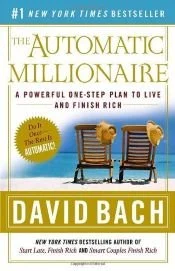
The Automatic Millionaire
By David Bach
From Goodreads
If I had to recommend one book to new graduates, young professionals, or those just entering the workforce, this would be the one. The Automatic Millionaire is for someone just starting out. It is easy to read, the concepts are simple, it isn’t overly complicated, and it sums up well the fundamentals mentioned above. Some will find this book overly basic. And it is. That is the point. If you have been saving 20% of your paycheck for decades and don’t have debt, this book isn’t meant for you. You are not the target audience. It can, however, be a good refresher. Or provide validation. Because sometimes it’s nice to know that you’re on track and doing the right thing.
The argument of the book is easily summarized as “the secret to creating lasting financial change is to decide to pay yourself first and then make it automatic.” So simple. So easy. But so many don’t do it. If you follow this simple rule for long enough and take advantage of the power of compounding, then you can, over the years, amass wealth. Full disclosure, I almost didn’t read it because of the title (I hate sensationalized sounding books). I figured it was another book promising readers to get rich quickly. Thankfully, I ignored my first reaction because this book is the exact opposite of that. For the average person, becoming (if not a millionaire) comfortable in retirement takes time. But you must pay yourself first and make it automatic. Another of Bach’s quotes that sums up what people should aspire to in personal finance is, “if I’ve learned one true secret to being an investor who does well in both good times and bad, it is this: managing your money should be boring.” My personal investments are boring. And if I take the book’s thesis to heart, then I’m doing the right thing.
If I have one criticism, it would be that the author shortchanges the importance of budgeting (the dreaded b-word). I believe the habit of budgeting is crucial to personal finance and will enable success in all aspects of finance, even paying yourself first. Which is why the next book is important in one’s personal finance library.
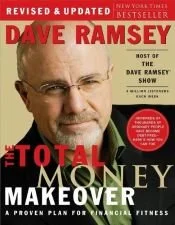
The Total Money Makeover
By Dave Ramsey
From Goodreads
This may be a controversial choice. Dave Ramsey gets a lot of hate, but when it comes to preaching the pitfalls of debt and getting one’s financial house in order, there are few equals. Yes, I understand that, strictly speaking, Dave Ramsey’s baby steps aren’t optimal from a coldly rational number crunching perspective, but personal finance isn’t just numbers. It is behavior. True, if you invest what you would be paying on your debts, the numbers may work out better. But most are not crunching numbers like that or are disciplined to behave this way. For most people, the debt snowball and “gazelle” intensity are behaviors that will help them achieve their financial goals. I also understand that people don’t like his views on automobile financing, student loans, 15-year mortgages, or pausing investments until you get out of debt. From a purely math perspective, I’ll concede the point. But remember, behavior matters. The Total Money Makeover excels in recalibrating your relationship with debt. As Dave Ramsey says, “winning at money is 80 percent behavior and 20 percent head knowledge.” What to do isn’t the problem. Doing it is. I read this book over 20 years ago and it permanently reframed my mindset regarding debt and challenged what I had been told about money.
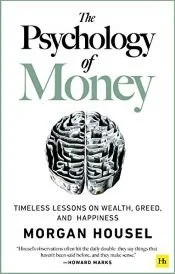
The Psychology of Money
By Morgan Housel
From Goodreads
If I had to pick just one finance book that everyone, regardless of where they are on their personal finance journey, should read, it would be The Psychology of Money. The key idea is that personal finance has more to do with how you behave than anything else. Personal Finance is not math. It is behavior. Housel breaks down how we deal with money and how our financial decisions are a combination of factors – among them is how we see and experience the world. As he explains, “your personal experiences with money make up maybe 0.00000001% of what’s happened in the world, but maybe 80% of how you think the world works.” Our mental models, the stories we tell ourselves, moving our financial goalposts, and using history to predict the future or time the markets contribute to our behavior surrounding money.
Housel touches on what he calls “appealing fictions” where we think things are true because we want them to be true. I have a friend, working as a financial advisor, mentioned to me how often his client’s optimism or pessimism toward their investments are based on the political party in power and what they saw on their 24-hour news channel of choice. He told me how he regularly talks clients out of doing something rash based on a reality that only they see. I’ve thought about this often and I can’t imagine how much less my total portfolio would be if I invested or divested based on whether a Democrat or Republican occupied the White House. Again, “your personal experiences with money make up maybe 0.00000001% of what’s happened in the world, but maybe 80% of how you think the world works.” This is important to keep in mind. Behavior matters.
Again, everyone, regardless of where they are on their personal finance journey, should read The Psychology of Monday. New investors, experienced investors, students, retirees – it doesn’t matter. This is why the Dave Ramsey approach identified above works – because the focus is about behavior! Once we realize that personal finance is a soft skill and not a math problem, we can better identify how we think and why we behave the way we do around money.
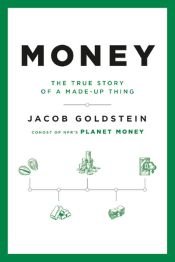
Money: The True Story of a Made Up Thing
By Jacob Goldstein
From Goodreads
Written by former Planet Money host Jacob Goldstein, this is a book about the history of money. Within a couple hundred pages, we read about the origins of paper money, interest rates, the beginnings of stock markets, central banks, the gold standard, crypto currencies, and more. For such a weighty topic, this book synthesizes complex concepts in an approachable manner. Money is not so much a personal finance book as it is a quick overview of what money is and, more importantly, how we decide what it is. That said, I don’t think anyone can have a healthy relationship with money until they understand exactly what it is…and isn’t.
Sure, you can invest your life savings in the stock market or in crypto currency, but Goldstien provides is a newfound appreciation on how we got to where we are and how global systems of trade, politics, and economics revolves around the concept of money. From a personal finance perspective, it’s important to realize that government and corporate debt have a crucial role in creating money – and how this is different than consumer debt. The sections on banking, particularly the rise of central banks, are key to understanding interest rates and their role in our finances. The history of the gold standard is more interesting than you probably thought and germane to how our collective faith in currency keeps the entire global system afloat.
Importantly, Goldstien points out that “there will be another financial crisis. And another. Technology will change. People’s beliefs about the balance between individuals and society, banks and governments, privacy and…stability and growth, will change. All of which to say that money will change.” The more we understand what money is and what it will be, the better able we are to deal with what the future holds.
How to Retire
by Christine Benz
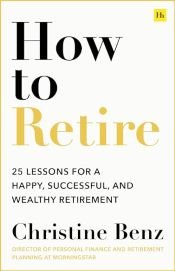
From Goodreads
This book isn’t about building wealth per se. It’s about what one should do to maximize their retirement experience. It’s for those approaching retirement and it provides tips and strategies for everything retirees must know. The book covers twenty topics that touch upon various aspects of retirement and items to consider just before and after we stop working'. Benz interviews experts on topics ranging from finding purpose after a career (especially if one’s career was a core part of their identity), maximizing social security, healthcare costs, creating estate plans, understanding the tax code, among others. These may not have been the most exciting topics for me twenty years ago, but as someone now glimpsing a tiny flicker of light far in the distance, this book was beyond useful. Although I’m still years away from retirement, I learned how to start thinking about what I want my future to be and how to make moves now to take advantage of what I have built going into my golden years.
This book doesn’t assume everyone is wealthy, but it does assume the reader has or will have a nest egg of some sort built up. While this isn’t written for someone just starting their career, if anyone is mid-career or beyond, I recommend this book to help start thinking about their retirement years and what very well could be a third of your life. As I approach my mid-fifties, I have a feeling that I will be returning to this book many times over the next decade and beyond.
Honorable Mentions:
As I mentioned above, I am a personal finance nerd, devouring books in the hope of gleaning some bit of additional knowledge. Here are a couple of honorable mentions that are still worth reading to gain different perspectives.
The Fastlane Millionaire
This is another book I nearly ignored because of the title. This is geared more toward the entrepreneurial minded. It covers passive income streams and how to build wealth independent of a typical salary paradigm.
The Millionaire Next Door
Millionaires do not necessarily look like millionaires. They may be blue collar, drive a Toyota, or maybe attended a state university – if they attended college at all. But they typically follow certain rules that made them wealthy in the first place.
Rich Dad Poor Dad
Of all the books on this list, this may be the one I am the least likely to recommend. But there are still some important points this book raises. Specifically, it is crucial to remember your personal finance balance sheet. Know the difference between assets and liabilities. What you may think is an asset, may actually be a liability.
The Compound Effect
This isn’t a personal finance book, but rather a book on habit formation. But it clearly articulates the power of compounding and how small steps enable big results if done long enough and with consistency. Good information to have when developing money habits.