Born to Run: A Hidden Tribe, Superathletes, and the Greatest Race the World Has Never Seen
by Christopher McDougall
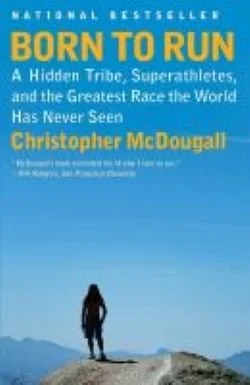
From Goodreads
“Perhaps all our troubles – all the violence, obesity, illness, depression, and greed we cannot overcome – began when we stopped living as running people. Deny your nature and it will erupt in some other uglier way.”
I am not a runner. I run, but my short infrequent jaunts pale next to the ultramarathoners profiled in Born to Run. I’m not in the same league or the same sport for that matter. These super-athletes run up mountains, crisscross deserts, and traverse deep canyons for miles at a time. By the time they reach 26.2 miles, they’re just getting warmed up. Born to Run introduces us to the strange world of ultrarunning, where earth’s rules do not apply: “women were stronger than men; old men were stronger than youngsters and stone age guys in sandals were stronger than everybody.” The book follows a colorful cast of long-distance runners and the Tarahumara, a tribe of indigenous Mexicans living deep within the Copper Canyons. They all come together for a memorable footrace on the Tarahumara’s home turf. It makes for an enjoyable and motivating read. If there is ever a book that will inspire someone to get off the couch, lace up their shoes, and attempt a 50-mile fun run, this is it.
Behind the overarching story of this epic race is a question McDougal seeks to answer, why did our species stop running? After all, as the title of the book suggests, we were born to run. For the bulk of human history, we have been runners. Our species is engineered to move – for long distances at a time. Our physiology, from the mechanical wonder that is the human foot to the way we breathe, is custom built for running. Unfortunately, while many modern humans are exhausted and out of breath after a mile, there are some that possess the seemingly superhuman ability to cover long distances without injury. How can African bushmen outrun an antelope over long distances? How do ultramarathoners, or a tribe of indigenous Mexicans stay injury free while others get debilitating foot and knee injuries? McDougall argues that we’ve lost our way. Running is in our nature, and we’ve denied it for too long.
McDougall rejects the circular argument behind so many running injuries: how come my feet hurt? Because running is bad for you. OK, why is running bad for me? Because it makes your feet hurt. Rather than blame running, he suggests we look at how we’ve constructed the modern world. Our diets, our first world comforts and sedentary lifestyle have not helped. Neither has our gear. McDougall takes special aim at the shoes we wear. The high-tech shoes – super soft and cushioned – may exacerbate running injuries by changing the actual mechanics of running. Running techniques and form are altered because these shoes fundamentally change how we move. Note: I’m not a doctor or medical professional of any sort and as I mentioned above, I’m not much of a runner. So, with that disclaimer out of the way, I do feel that my personal running experience has improved after switching footwear. I ditched my previous shoes – engineered for maximum arch support, with comfortable gel filled pads. My new shoes are minimalist, low to the ground with a wide toe box and a very thin cushion. Running does indeed feel better now. I no longer strike my heel when running, a habit didn’t even realize until the soft pillowy soles were gone. Again, a disclaimer: this is my experience and my experience only. Others’ experiences may differ.
So, are high-tech shoes the problem? Maybe. Or maybe not. I’m not ready to pin the blame at the feet (pun unintended) of shoe manufacturers quite yet. To their credit, at least they are developing products that make people get off the sofa and run. They sell movement and exercise and that is never a bad thing.
But is the correct footwear enough to get people moving? No. Beyond gear, McDougall observes that the real missing ingredient is joy. Those crazy ultra long-distance runners? They LOVE running! It becomes part of their life. Running is who they are and they embrace it. Which brings us to the other important question Born to Run asks: when did we lose that love? Why do so many humans dread running? I, for one, don’t love running. I barely tolerate it most days. That said, I’ve never regretted getting outside and covering a couple of miles. Never. In fact, the longer I run, the more I like being out there. After a mile or two I begin asking myself, “do I want to continue or head home to relax?” Sometimes I stop, but when I do continue, especially into my third mile and beyond, I start feeling great. Will I ever LOVE it? Not sure. But it makes sense that runners chase this sensation. On the days I do run, I 100% understand why people chase the so-called “runner’s high.” It feels good and is a reminder of who we are and what our species is supposed to be.